Why Foodservice Towels Create a Different Detergent Challenge
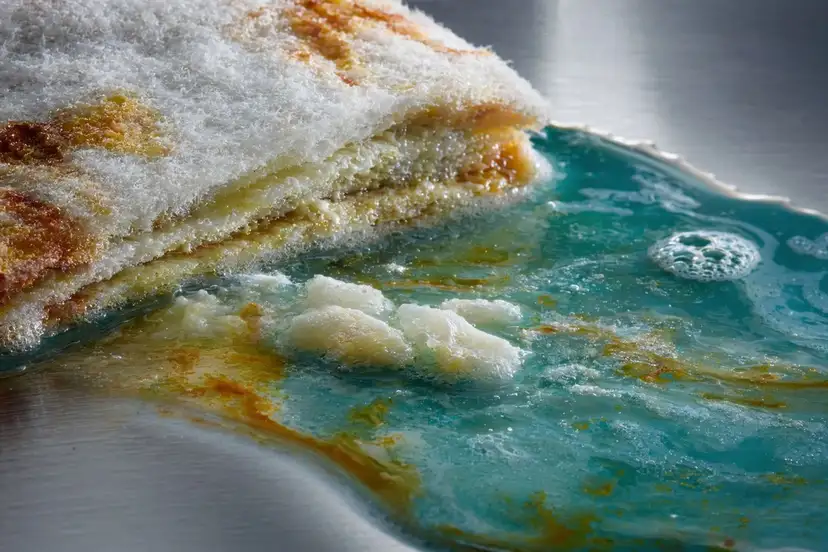
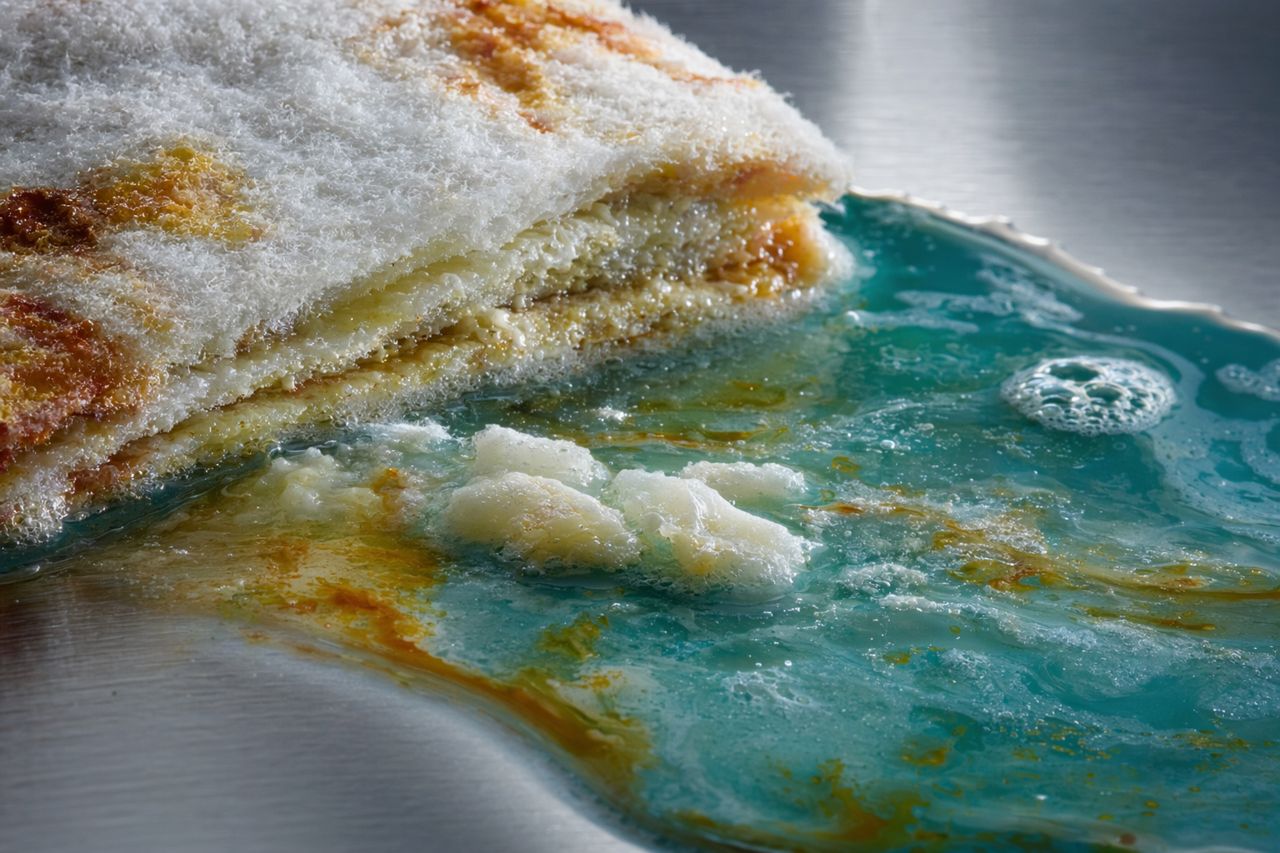
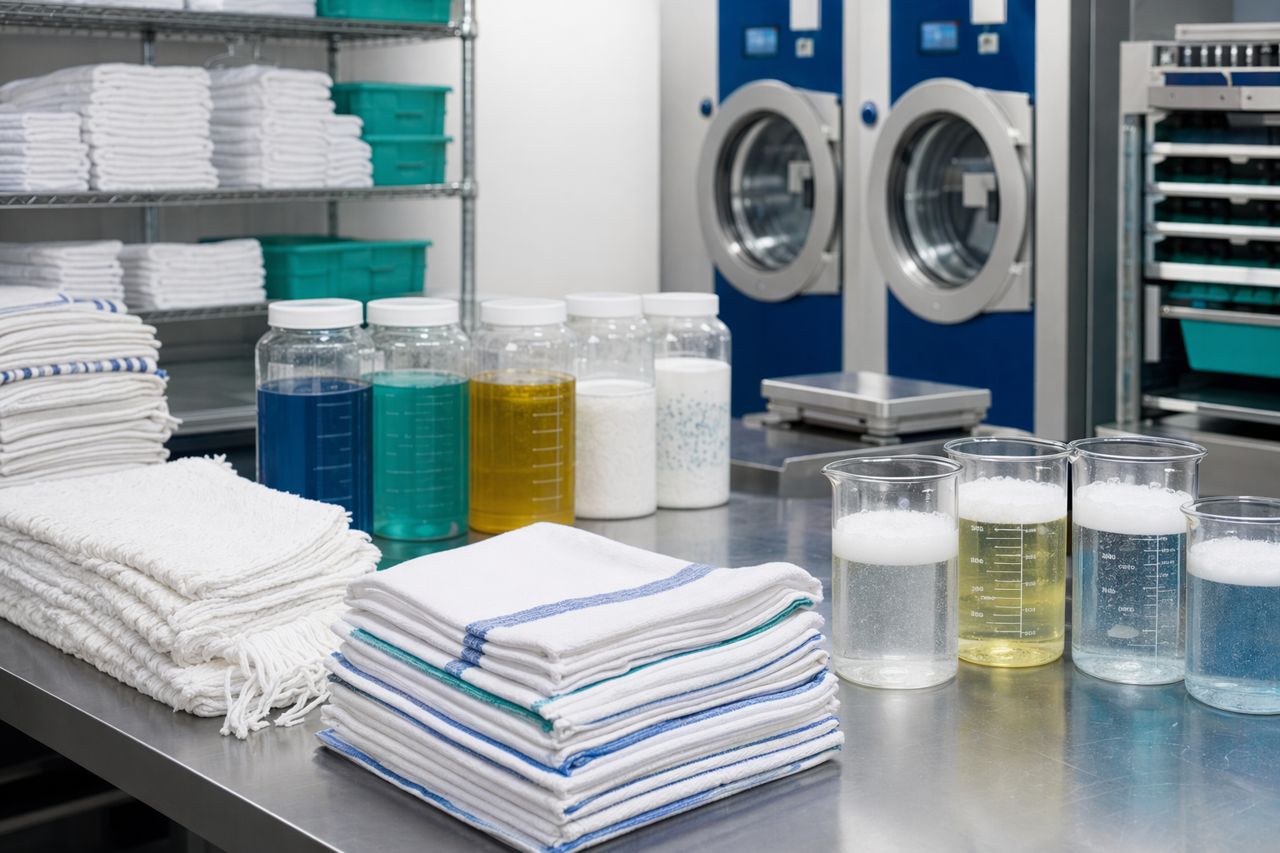
Foodservice textile programs are not the same as general hospitality or light industrial laundry. Restaurant towels, bar mops, aprons, grill cloths, and catering linens collect a dense mix of fats, oils, sauces, dairy residues, starch films, protein soils, color bodies, and persistent odor precursors.
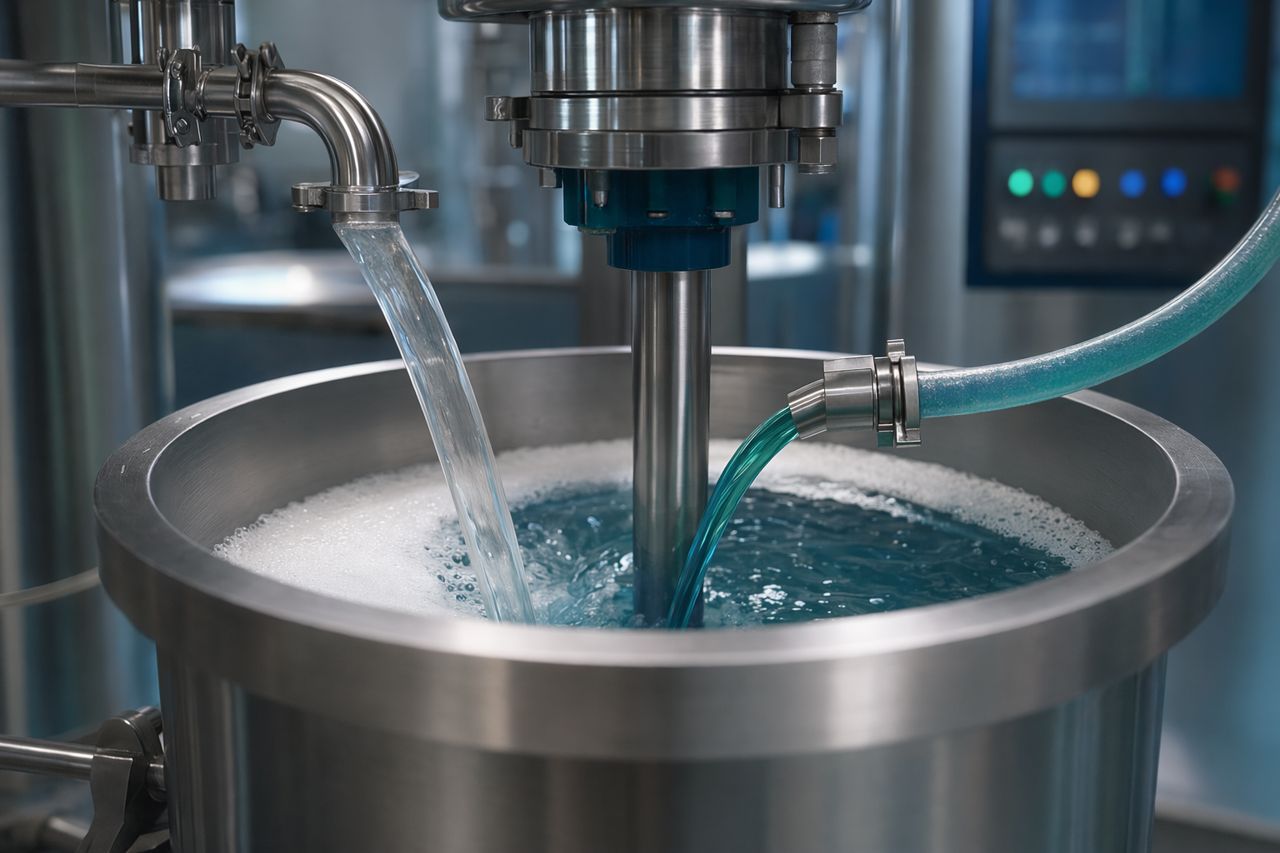
For detergent manufacturers, that soil profile creates a formulation problem: the wash liquor must break down layered organic residue quickly, suspend released soils, control redeposition, and remain stable across commercial laundry conditions. This is where well-selected bulk enzymes for detergent manufacturing can support differentiated performance, especially when integrated with the right surfactant, builder, alkalinity, and processing strategy.
The soil load is mixed, layered, and variable
Foodservice towels are exposed to many residues in the same shift. A single towel may carry fryer oil, butterfat, tomato sauce, emulsified dressings, egg proteins, gravy starch, coffee tannins, and bacterial odor load.
This combination matters because soils do not release in a simple sequence. Grease can trap proteins. Starch can form films that bind particulate matter. Dairy residues can oxidize and contribute to sour or rancid odor. Tomato and spice systems can leave visible staining even when part of the organic load has been removed.
For detergent producers, the challenge is not simply higher cleaning power. It is targeted soil breakdown without destabilizing the finished liquid, powder, or unit-dose detergent system.
Grease is only part of the problem
Foodservice towels are often described as a grease challenge, but grease is usually acting as a carrier for other soils.
Common residue groups include:
- Fats and cooking oils from fryers, grills, sauté stations, butter, and pan sprays
- Protein residues from meat juices, egg, dairy, cheese, cream sauces, and seafood
- Starch films from potatoes, flour, rice, pasta, gravies, and thickened sauces
- Pigmented food soils from tomato, curry, paprika, coffee, tea, wine, and caramelized residues
- Odor precursors from trapped fats, microbial growth, dairy breakdown, and incomplete soil removal
A detergent designed only around surfactant wetting and emulsification may loosen free oil, but it may not sufficiently address the protein and starch matrix that holds embedded residue to cotton and blended textiles.
Why enzymatic support can improve detergent architecture
Enzymes allow detergent manufacturers to build more precise cleaning mechanisms into the formulation. Instead of relying only on alkalinity, temperature, and surfactant intensity, enzymatic systems can help fragment specific organic soil structures so the rest of the detergent package can remove and suspend them more effectively.
In foodservice towel applications, formulation teams often evaluate enzyme systems for:
- Grease-associated organic residue removal
- Protein soil breakdown from dairy, egg, meat, and sauces
- Starch film reduction from gravies, batters, and prepared foods
- Odor-source reduction through more complete organic soil release
- Improved wash consistency across varied restaurant loads
- Reduced dependence on harsher formulation extremes where appropriate
The commercial advantage is not a single ingredient claim. It is a more capable detergent platform that can handle mixed food soils with better repeatability.
Formulation compatibility determines real-world value
Bulk enzyme selection for detergent manufacturing must consider more than the soil target. The enzyme concentrate needs to fit the manufacturer’s process, finished product format, and customer use conditions.
Key compatibility questions include:
- Is the enzyme system suitable for the target detergent pH range?
- Does it tolerate the selected surfactant blend?
- Can it remain stable in the presence of builders, chelants, solvents, preservatives, and fragrance systems?
- Is the product format liquid, powder, gel, paste, or portion-controlled?
- Will the enzyme be added during high-shear blending, low-shear finishing, or post-cooldown dosing?
- Are storage temperature, transit exposure, and shelf-life expectations aligned with the intended supply chain?
For foodservice towel detergents, these questions are practical commercial controls. A high-performing enzyme candidate that loses compatibility in the finished detergent is not a viable scale-up option.
Odor carryover is a performance and retention issue
In commercial laundry programs, odor is often the signal that customers notice first. A towel may look acceptable after washing but still carry sour, fatty, or stale notes after drying, storage, or rewetting.
That carryover can be caused by incomplete organic soil removal, oxidation of residual fats, microbial activity in retained residue, or redeposition during wash. Enzymatic detergent systems can help by attacking the organic structures that protect odor sources from full removal.
For detergent manufacturers serving laundries, distributors, or foodservice chemical programs, odor control is not cosmetic. It affects textile acceptance, customer complaints, rewash rates, and account retention.
Manufacturing teams need scale-up confidence
Foodservice towel detergents are often sold into demanding programs with high throughput and tight cost control. Performance must hold across multiple water qualities, machines, soil loads, and dosing practices.
Foamforge supports detergent manufacturers with bulk enzyme supply and formulation guidance focused on industrial cleaning products. We help formulation leaders assess enzyme fit, compatibility risk, handling requirements, and scale-up route before commercial launch.
What we can support
- Enzyme selection for mixed foodservice soil profiles
- Compatibility review with surfactants, builders, chelants, solvents, and preservatives
- Guidance for liquid and dry detergent manufacturing routes
- Bulk supply planning for pilot, validation, and production demand
- Practical discussion of storage, dosing point, and process integration
- Formulation-led support for differentiated industrial laundry detergents
Build detergents for the actual towel, not the average stain
Foodservice towels present one of the more complex organic soil profiles in institutional and industrial laundry. Grease, protein, starch, color, and odor do not behave independently. They interact on the textile and inside the wash liquor.
A stronger detergent is not always the most commercially durable answer. A better-designed detergent is the goal: one that uses enzymatic breakdown, surfactant action, alkalinity, sequestration, and soil suspension as a coordinated system.
If you are developing or improving an industrial laundry detergent for restaurant, catering, or hospitality foodservice towel programs, Foamforge can help evaluate enzyme options that fit your performance target and manufacturing reality.
Request a quote through the on-site form to discuss bulk enzyme options for foodservice towel detergent manufacturing.