Water Hardness and Laundry Detergent Performance | Foamforge
How regional water hardness affects institutional laundry detergent performance, builder strategy, enzyme positioning, service complaints, and account onboarding.
Request pricing How regional water hardness affects institutional laundry detergent performance, builder strategy, enzyme positioning, service complaints, and account onboarding.
Request pricingInstitutional laundry buyers judge detergent by repeatable outcomes: soil release, whiteness retention, stain removal, fabric hand, machine hygiene, and complaint rates. Water hardness sits underneath many of those outcomes.
For manufacturers supplying hotels, healthcare laundries, foodservice linen programs, workwear laundries, gyms, and facility service accounts, regional water quality is not a background variable. It shapes formulation architecture, dosing guidance, account onboarding, and how field teams explain performance.
Foamforge supports industrial cleaning product manufacturers sourcing bulk enzymes for detergent manufacturing with compatibility guidance for detergent systems that must perform across varied water profiles.
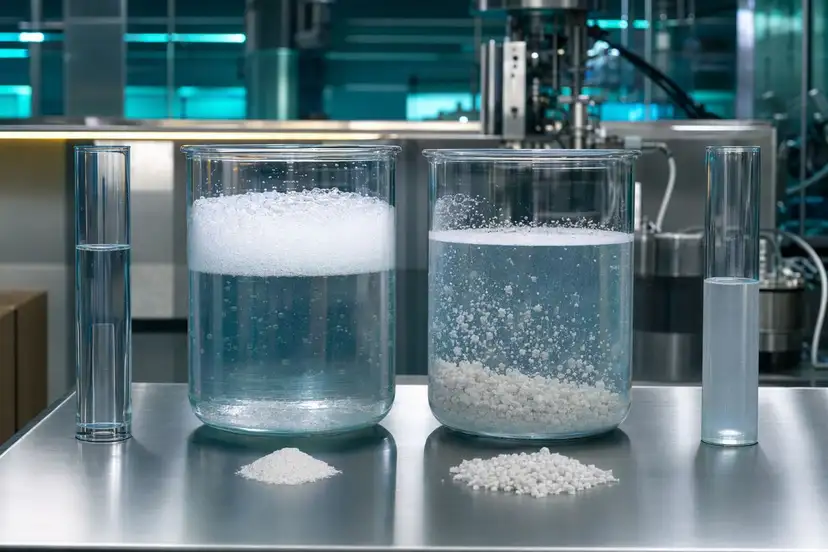
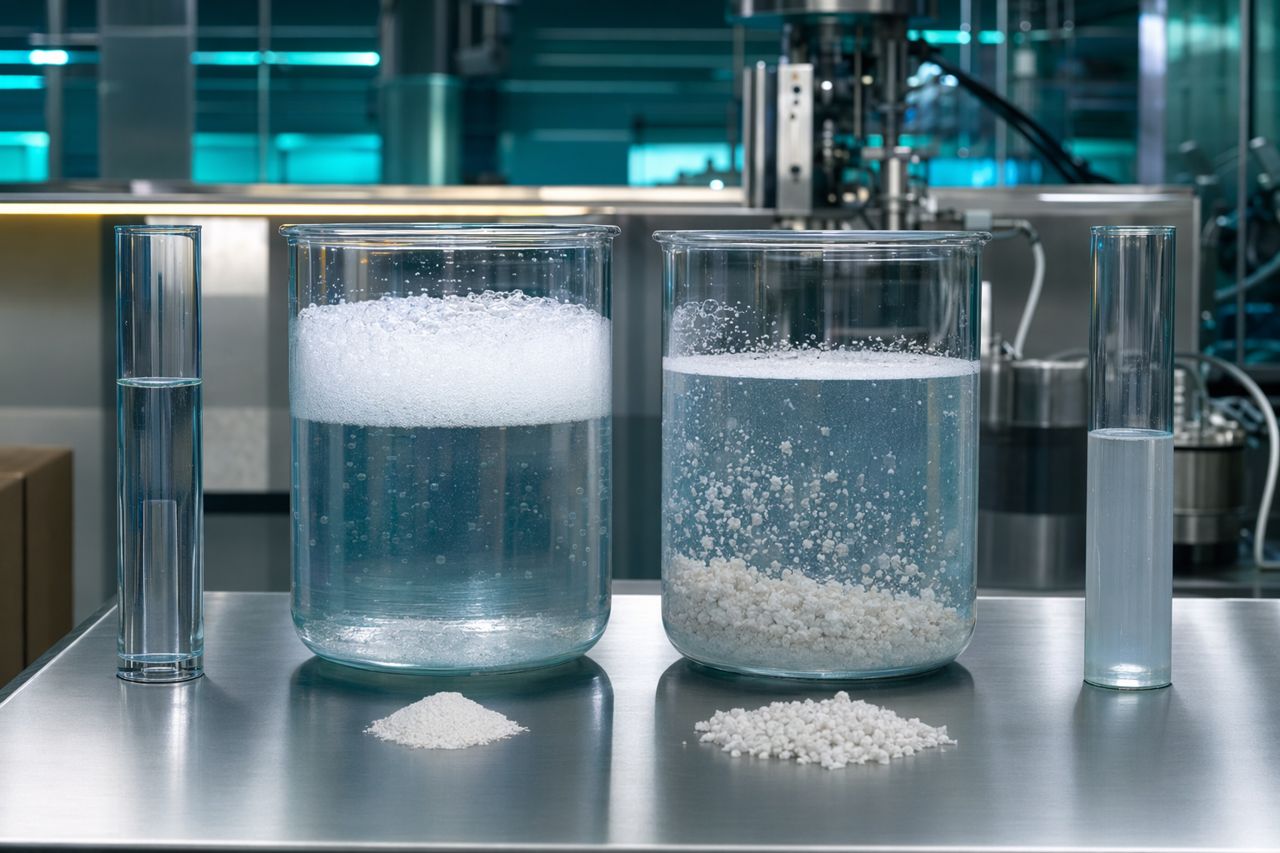
Water hardness is mainly driven by dissolved calcium and magnesium ions. In detergent use, those ions can interfere with cleaning chemistry in several commercially relevant ways:
In institutional accounts, those effects are amplified because wash loads are large, soil loads are predictable but heavy, and expectations are tied to contract retention.
A detergent that performs well in soft water can underperform in hard water if the builder package is not sized correctly. A formula that is overbuilt for a soft-water region may carry unnecessary cost, create avoidable residue risk, or complicate rinse behavior.
That creates a practical challenge for detergent manufacturers:
Hardness strategy is therefore not only a formulation issue. It is a commercial positioning issue.
Surfactants drive wetting, emulsification, particle removal, and oily soil suspension. In hard water, calcium and magnesium can reduce surfactant efficiency, particularly in systems that are not sufficiently supported by builders or dispersants.
Common field symptoms include:
For institutional products, the formulation goal is not maximum foam. The goal is controlled cleaning performance under realistic wash conditions. Foam behavior should support equipment compatibility and rinse expectations rather than become the headline metric.
Builders help manage hardness ions, support alkalinity, improve soil suspension, and protect the rest of the detergent system. The exact builder strategy depends on the target account type, regional water profile, regulatory expectations, cost envelope, and format.
Typical formulation questions include:
When builder capacity is too low for the water profile, enzymes and surfactants may still be present, but the system around them may not let them deliver their intended contribution.
Enzymes are selected for specific soil challenges: protein-based soils, starchy residues, fat-containing soils, and fabric-care related performance targets. In institutional laundry, enzymes can help manufacturers build differentiated detergents without relying only on alkalinity and high surfactant load.
However, enzymes do not operate in isolation. Their commercial value depends on the full detergent environment:
For manufacturers buying bulk enzymes, the key question is not simply which enzyme to add. The key question is how that enzyme fits into a robust detergent architecture for the intended water conditions and account expectations.
Water hardness often appears in customer complaints indirectly. The account may not say, “Our hardness profile is stressing the detergent system.” They may report:
These patterns are important because they can trigger formulation changes, service interventions, or account churn. A water hardness framework helps separate product deficiency from site-condition mismatch.
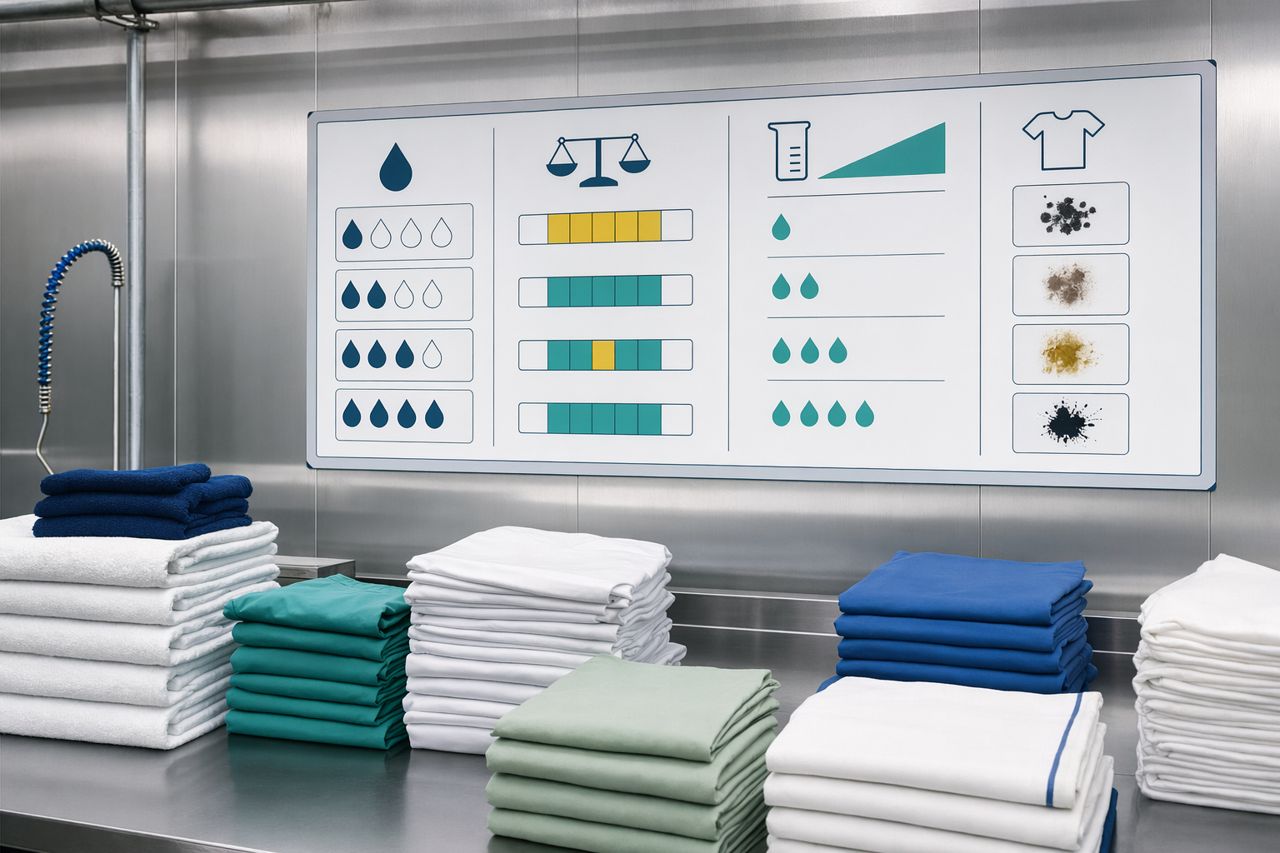
For institutional laundry programs, onboarding should capture more than machine type and load size. Water profile questions can materially improve the first formulation recommendation and the service script.
A practical onboarding checklist includes:
This information allows detergent manufacturers and distributors to position the product honestly and recommend the right detergent family, dosage logic, or supporting product.
A detergent claim that is valid in one water profile may be less reliable in another. That does not mean the product is weak. It means the positioning needs boundaries.
For B2B detergent brands, regional hardness should influence:
Clear positioning reduces overpromising and protects long-term account confidence.
When adding enzyme concentrates into detergent manufacturing, formulation leaders need more than supply availability. They need scale-up confidence.
Key manufacturing considerations include:
Foamforge works with manufacturers on practical integration questions so enzyme selection aligns with the finished detergent, not just the soil target.
When performance varies across accounts, start with water profile before changing the enzyme package. A structured troubleshooting path can prevent unnecessary reformulation.
Useful sequence:
This approach helps protect formulation resources and improves communication between technical, sales, and service teams.
Foamforge supplies enzyme solutions for industrial cleaning product manufacturers that need formulation-led support, reliable bulk supply, and compatibility guidance for detergent systems.
For laundry detergent manufacturers, we can support discussions around:
We do not treat enzymes as isolated ingredients. We help manufacturers evaluate how enzymes fit into the detergent system customers actually use.
If you are developing or scaling institutional laundry detergents and need bulk enzymes for detergent manufacturing, share your formulation format, target account type, and regional water considerations through the on-site request form.
Tell us your application and volume — we reply with pricing and lead time.